February, 1999 Mr. Alex Robbins, Dear Mr. Robbins,
I have been asked by Noel Dempsey, T. D., Minister for the Environment and Local Government to acknowledge receipt of your recent letter in connection with a project on Nature Conservation and Land Management.
As this matter is more appropriate to the Department of Agriculture and Food. Your letter has been forwarded to Mr. Joe Walsh, T.D., Minister for Agriculture and Food, for his attention. Yours sincerely, Noeleen Behan, |
March 4th, 1999 Mr. Alex Robbins
Dear Mr. Robbins,
Thank you for the material which you sent to this office in recent days. I have forwarded your material to our National Conservation Specialist, Mr. Joe Hall. He is based at Teagasc, Johnstown Centre, Wexford, phone (053) 42888.
Yours sincerely,
Micheal Miley Head of Public Relations & Information
|
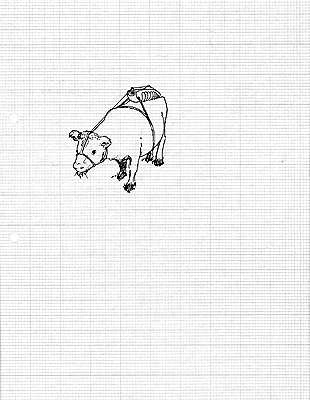
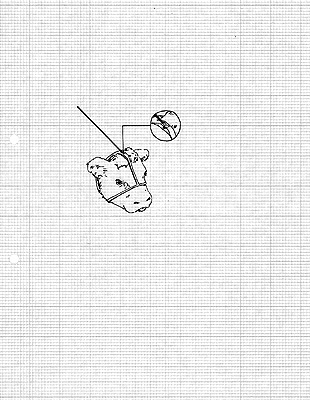
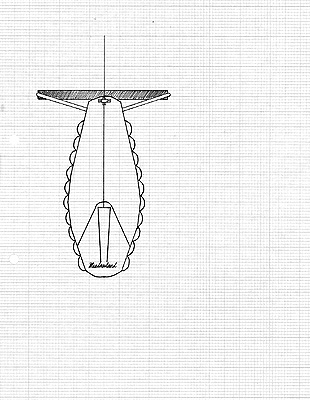
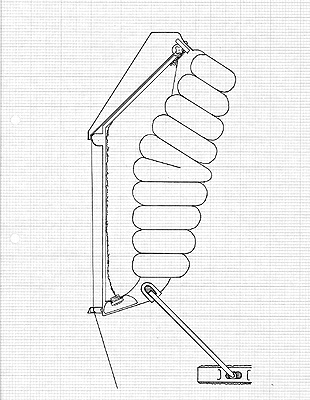
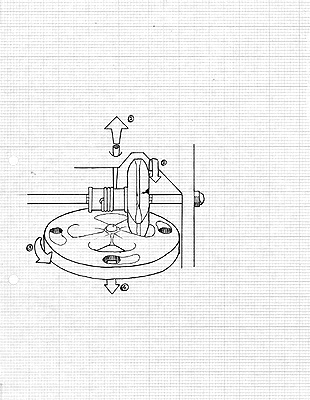
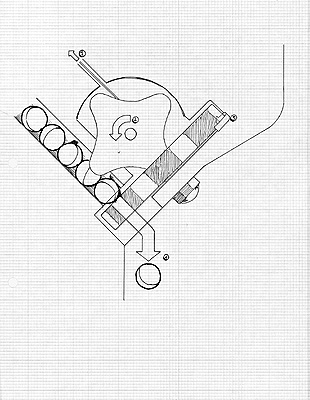
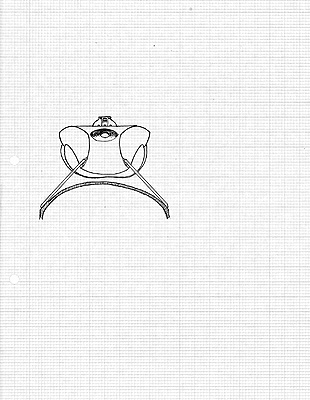
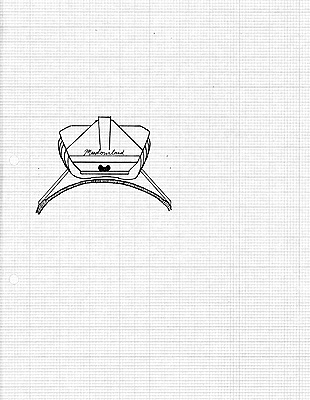
My name is Alex Robbins and I am currently a design student at the Burren College of Art. The school is located in West Ireland in a small agricultural and tourist village called Ballyvaughan. I have studied design for most of my schoolastic career, but I have also maintained a strong interest in Nature Conservation and Land Management. The school's location immediately provided me with the opportunity to converse with the local farmers and from our discussions I learned what an integral role the cattle play in the environment area. As my understanding of the interaction between humans, cattle and earth grew I envisioned an invention I call "The Meadowland." I enlisted the help of Sean Murphy, an engineering student at the University College, Galway. Working together, with constant advice and suggestions from the local farmers, Sean and myself have come up with the design and mechanics for what we believe could be a revolutionary step in Nature Conservation and Land Management. There has been a growing international recognition that traditional practices by local people including certain agricultural and pastoral activities, rather than constituting harmful exploitation of nature may actually maintain and enhance natural features and biological diversity. The extensive grazing of vegetation by domestic livestock is one of the main ecological processes which has led to the biological richness and diversity of the area around Ballyvaughan. "The Meadowland" works in conjunction with these ideas by utilizing the natural movement of cattle. As the cow moves its head to take a bite of grass, it triggers a slotted gear which dispences an encased amount of seed, which we call the pod. I have enclosed a small booklet which illustrates just how the invention works. PAGE 1: This shows how "The Meadowland" interacts with the whole body of the cow. PAGE 2: This shows how it attaches to the cows head. While the straps may appear to be constraining, they would be made out of a durable elastic, lined with fleece on the inside to reduce any discomfort. The adjustable waist strap would also have a fleece lining but would be made out of a strong leather. The bubble pads that line the bottom of the unit would also be made of a soft leather. PAGE 3: Shows a top view of the unit. PAGE 4: Shows an exposed side view, revealing the storage area, filling cap and mechanics. PAGE 5+6: Shows the step by step process of the mechanics. The wire (1) is pulled by the movement of the cow's head. This turns the ratching gear (2) which moves the slotted gear (3). The Pod (4) then drops through the slot to the earth. One full rotation of the slotted gear goes from closed to open to closed again, holding the other pods in place. PAGE 7: Shows the front view. PAGE 8: Illustrates the equality between the average cow mouth and the average growth of a pod. The Pod contains just enough seed to germinate the same size area as the bite of an average cow mouth. The case of the Pod would be made out of a safe edible material should a cow mistakenly swallow the Pod instead of grass. If this was the case, the Pod would not go to waste for the waste of the cow would then contain the seed. The seed inside the Pod depends primarily on the area of use. Here in West Ireland, for example, the shubs and grasses can choke out the unique alpine plant. An ideal Pod for this area would then contain a mixture of seed. It would have the seed of the domineering grass to keep the land looking the same but it would also contain a smaller amount of seed of alpine plants that are in need of reususcitation. We have received insurmountable comments and guidance from the local farmers but we feel that their advice is limited. Their knowledge of the movement, comfort and all around attitude of the cows has been irreplaceable. We also understand that their knowledge of cows is based on their personal profit, alongside the health of the herd. Conservation of the land may not be their first concern. This is where your organization comes in. Our ignorance of nature conservation is as big as all human's ignorance of nature itself. Any comments or suggestions would then be priceless. Even if you see no place for "The Meadowland" within your organization, your experience with nature will help us make this creation all that more cohesive with the earth. We understand that you may be very busy, but the slightest responce can help us. Please keep in mind that by using the cow's natural chaotic movement you could conserve the way you want to conserve. You could easily maintain the environment in question with out a human hand in a controlling and domineering position. Similar to lighting fire with fire, you can conserve nature with nature. I will be incredibly grateful for any thoughts you may have. |